OVO Energy, 2021
Increased conversion by 9% through clear energy plan content
AT THE TIME…
Customers began their sign-up — then stalled.
55% dropped off at the energy plans page.
Outdated messaging and unclear plan comparisons were standing in the way.
At the same time, a company-wide rebrand was underway, leaving key pages misaligned.
TALKING WITH CUSTOMERS
The issue wasn’t the plans. It was the language.
I conducted usability testing and mapped the end-to-end sign-up journey to get the 'lay of the land'.
Findings revealed unclear plan details and confusing naming conventions, which directly informed a redesign centred on clarity and comprehension.
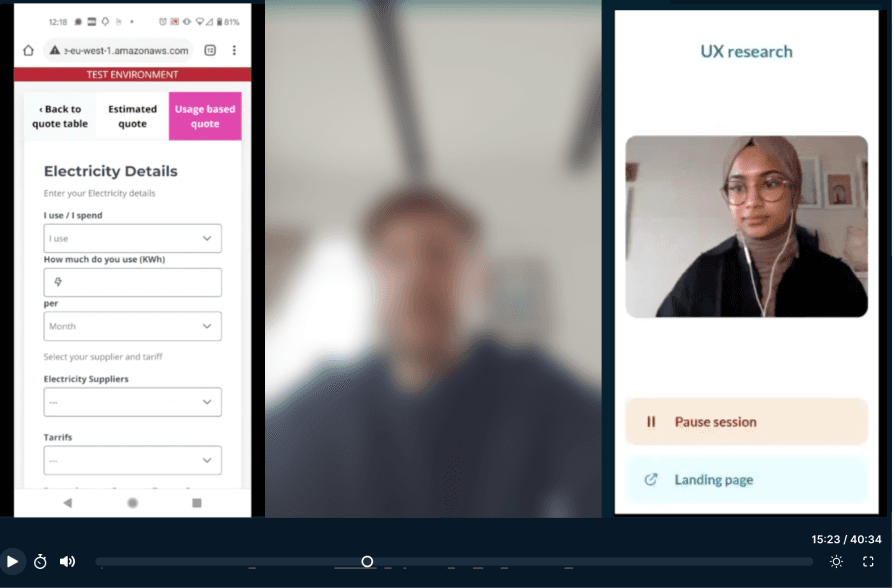
Moderated usability testing sessions online with customers looking to switch providers
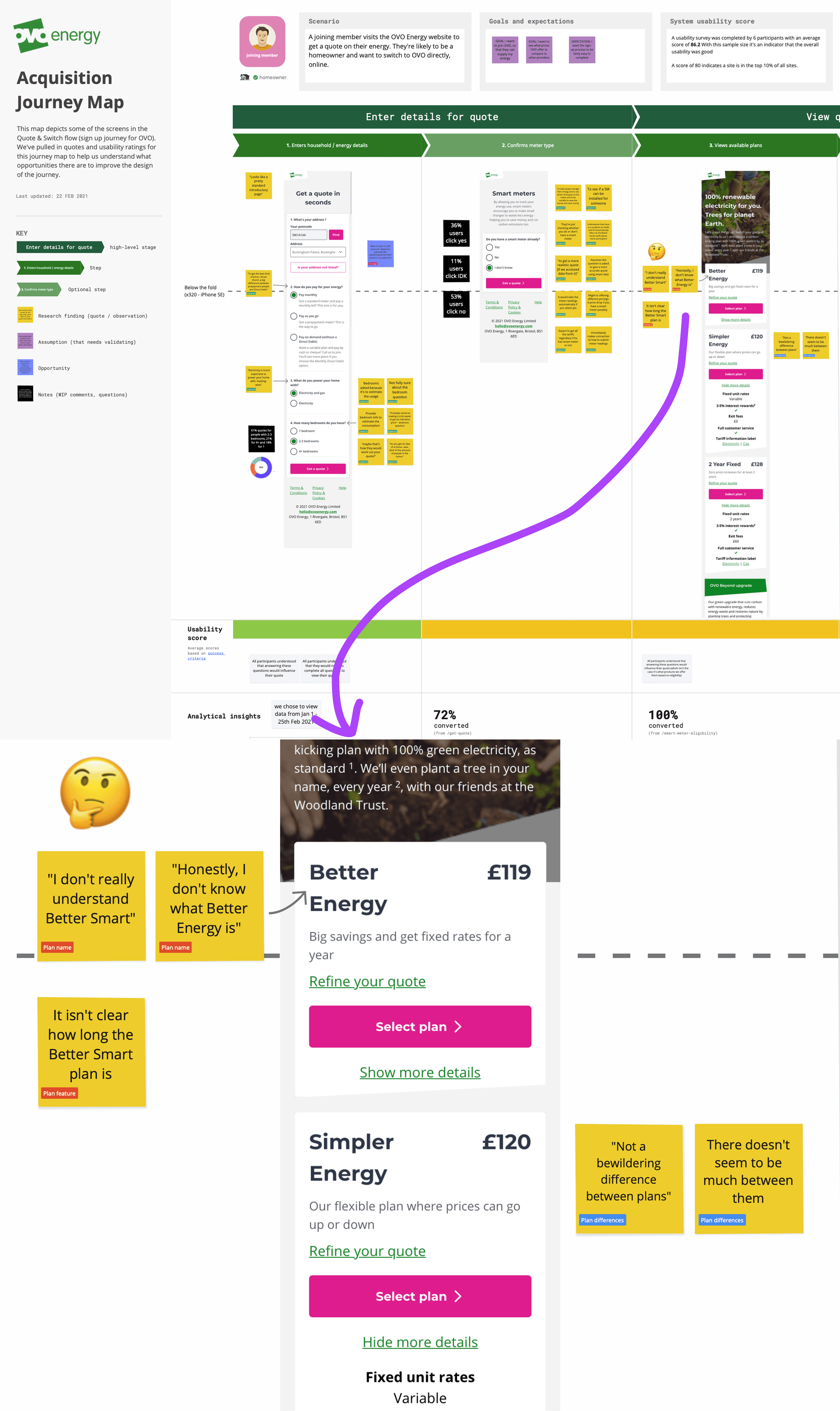
I mapped the sign-up journey, layering customer quotes and usability scores to identify where clarity was breaking down
INFORMATION ARCHITECTURE
Reprioritising plan content
I reviewed the plan page to understand whether the content order supported clear decision-making.
I then reorganised it around what customers needed most, creating a hierarchy that worked clearly on mobile.
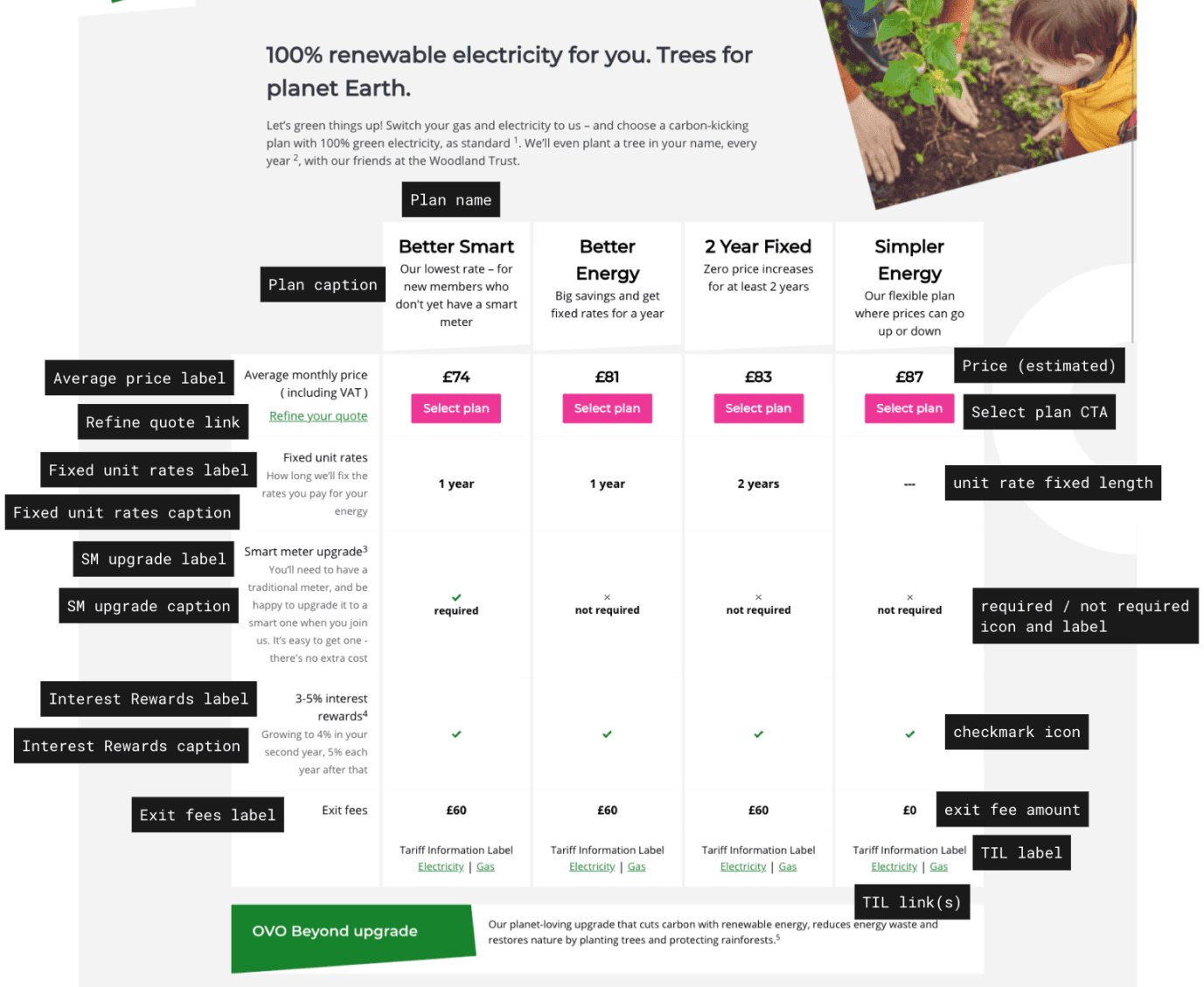
Breaking down the original plan components to clarify hierarchy, comparison points, and priority of information
With all the information we had, I asked the question…
How might we make energy plan options easier to understand, so customers can choose confidently and complete their sign-up?
Starting with mobile to simplify decisions
I translated the opportunity into initial concept sketches. The hierarchy work drove a mobile-first structure, prioritising the most important information. I then reviewed the direction with product and brand to refine and move forward.
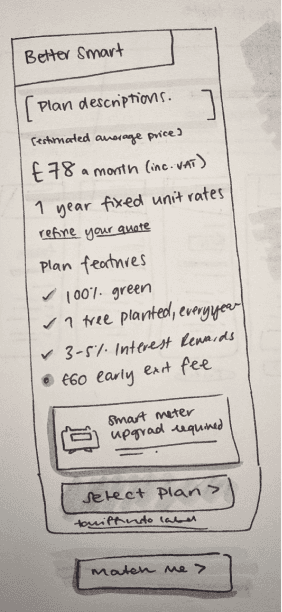
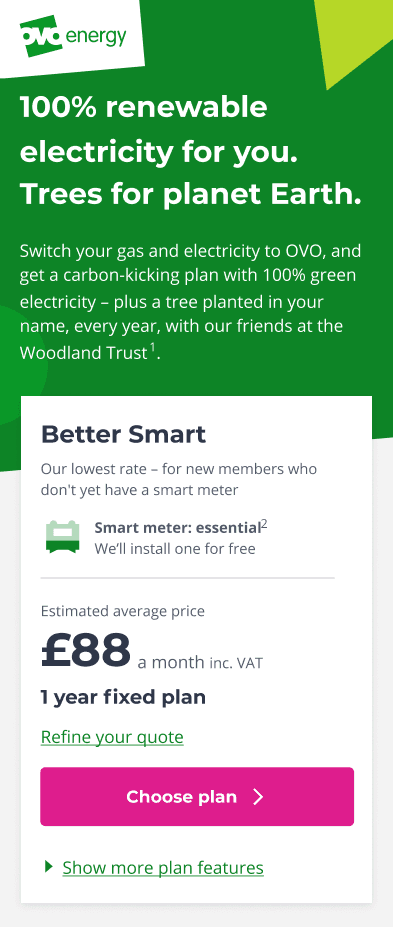
Sketched a view of how the content stacks with what customers found the most important and what OVO wanted to showcase in their plans
VALIDATION
Measuring comprehension across versions
After narrowing multiple concepts down to four refined directions, I tested them on two questions:
Can customers clearly explain the plan types?
Do they understand the differences between them?
I ran usability sessions with participants exploring energy providers, using a scoring framework to compare which design patterns improved comprehension and decision confidence.
Working closely with the branding team, I aligned proposed updates to tone, colour, and visual hierarchy with evolving brand guidelines. Testing revealed consistent confusion around plan naming and approved microcopy, prompting further iteration.
I refined key plan descriptions and comparison cues, then re-tested the updated versions. This increased overall understandability and informed refinements to the wider content guidelines.
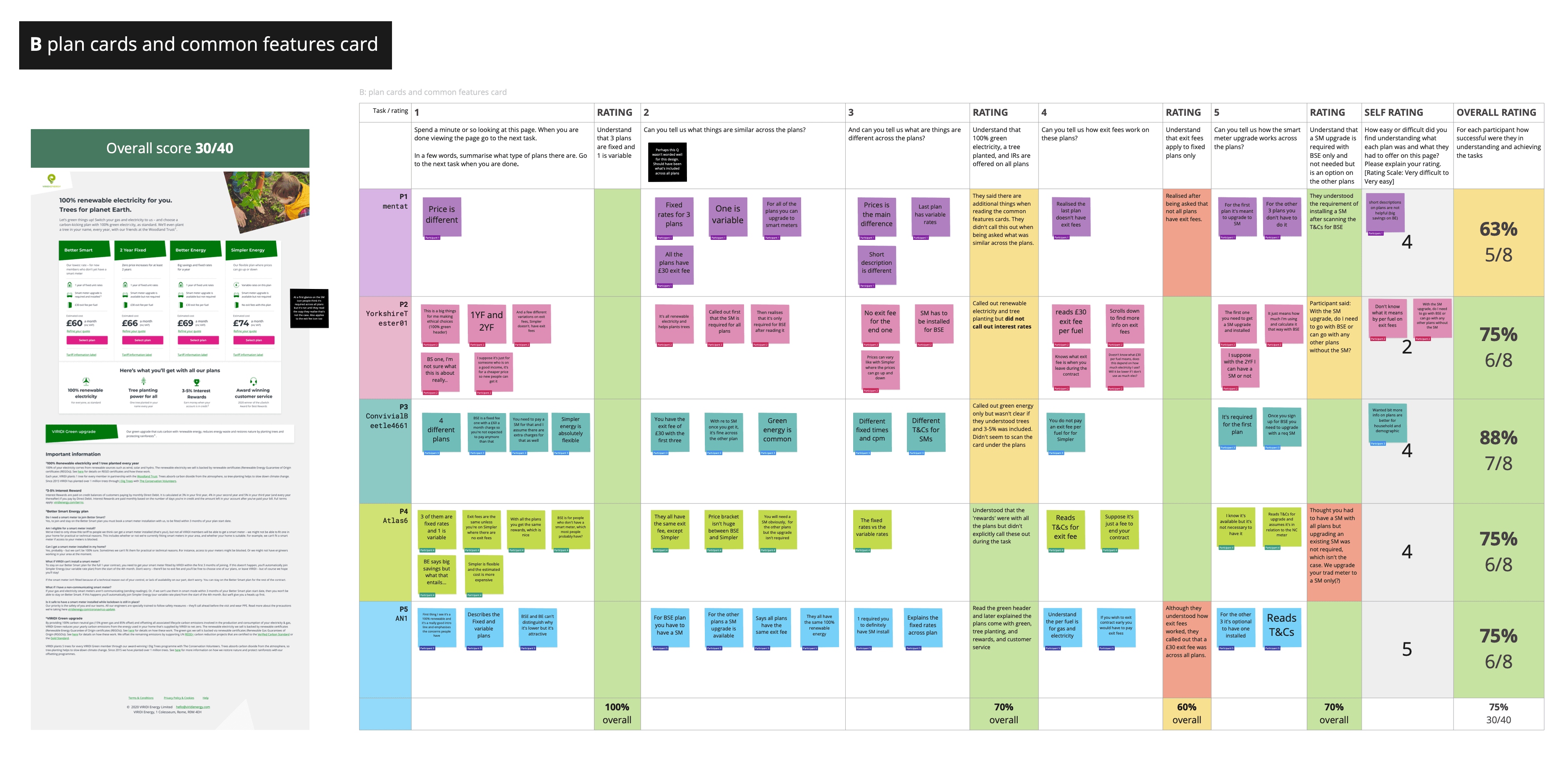
The scoring for one of the design concepts
OUTCOME
From concepts to controlled experiment
I combined the highest-scoring elements from each design into a single refined concept, ready for A/B testing. The copy and branding were signed off and the team came together and revisited the hypotheses we drafted earlier.
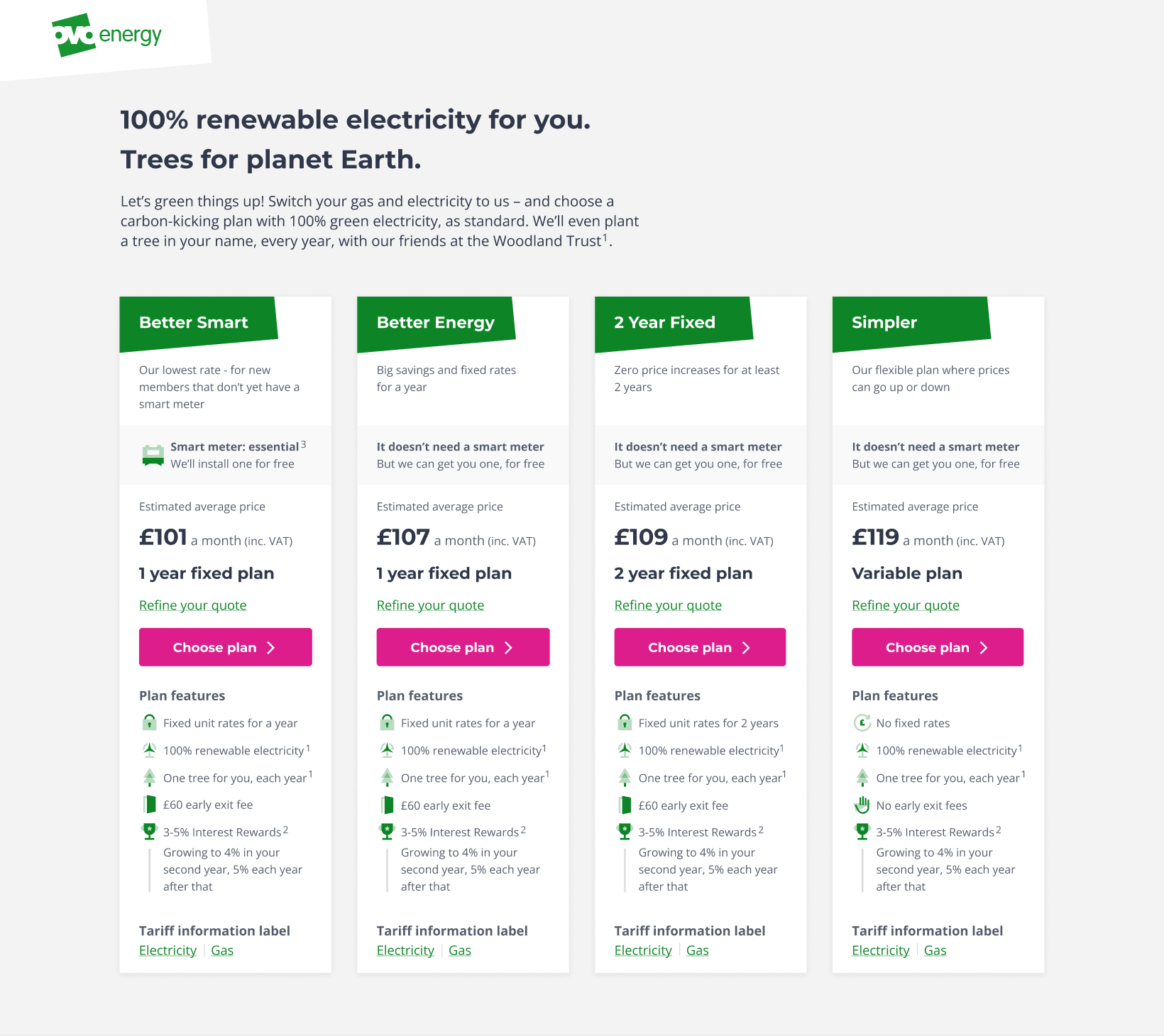
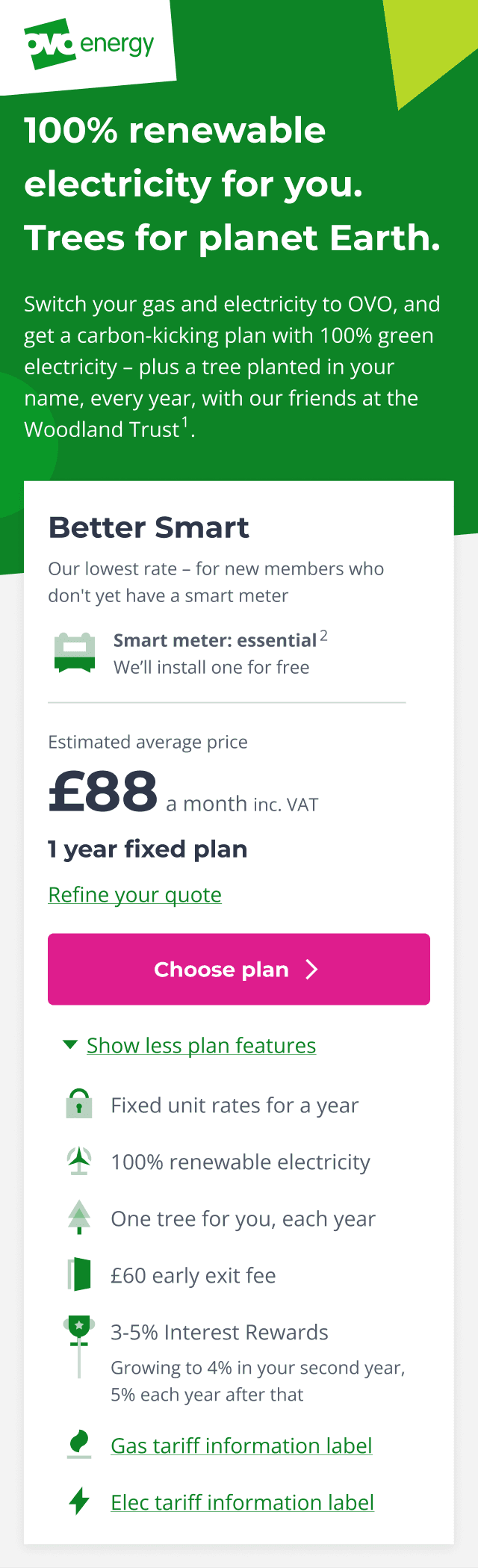
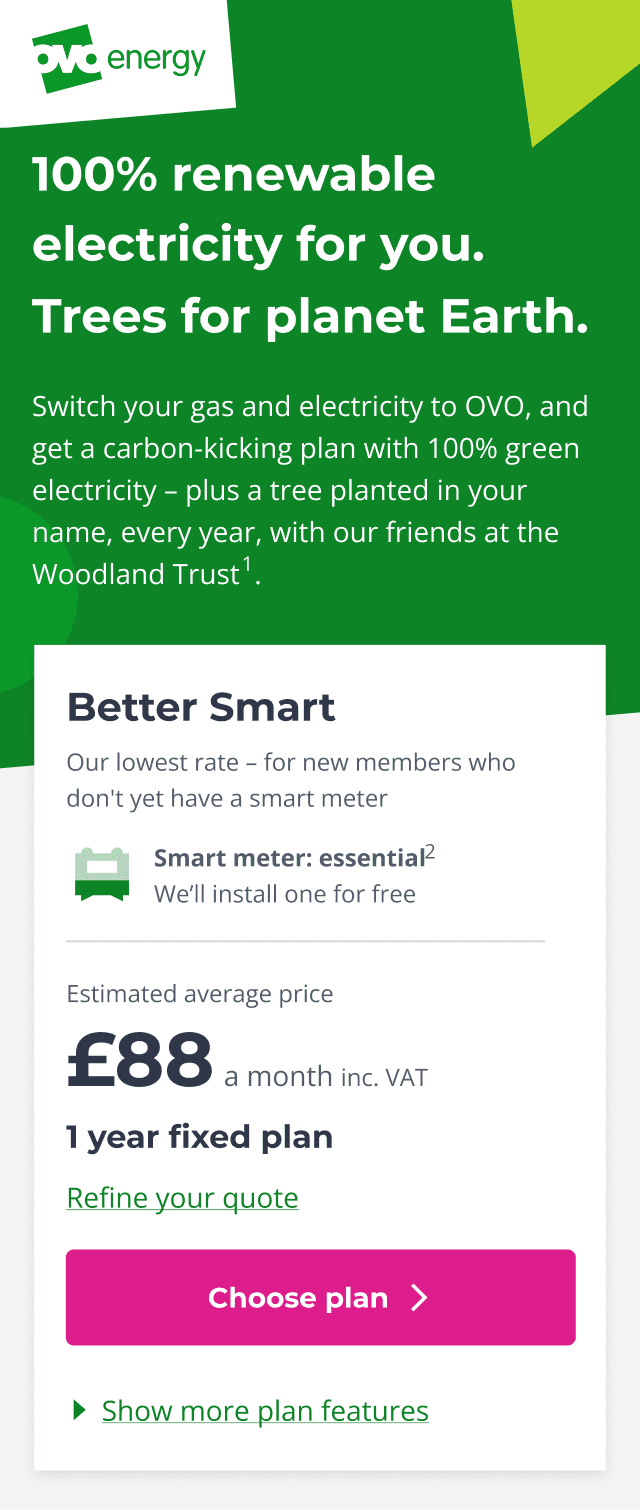
We believe that if we lay out the plans with prioritised content in a card format, buying customers will comprehend the plans more easily than the current table layout. We will run an A/B test with the original design and the variant. We will consider the hypothesis validated if sign-up conversion increases by ~10%.
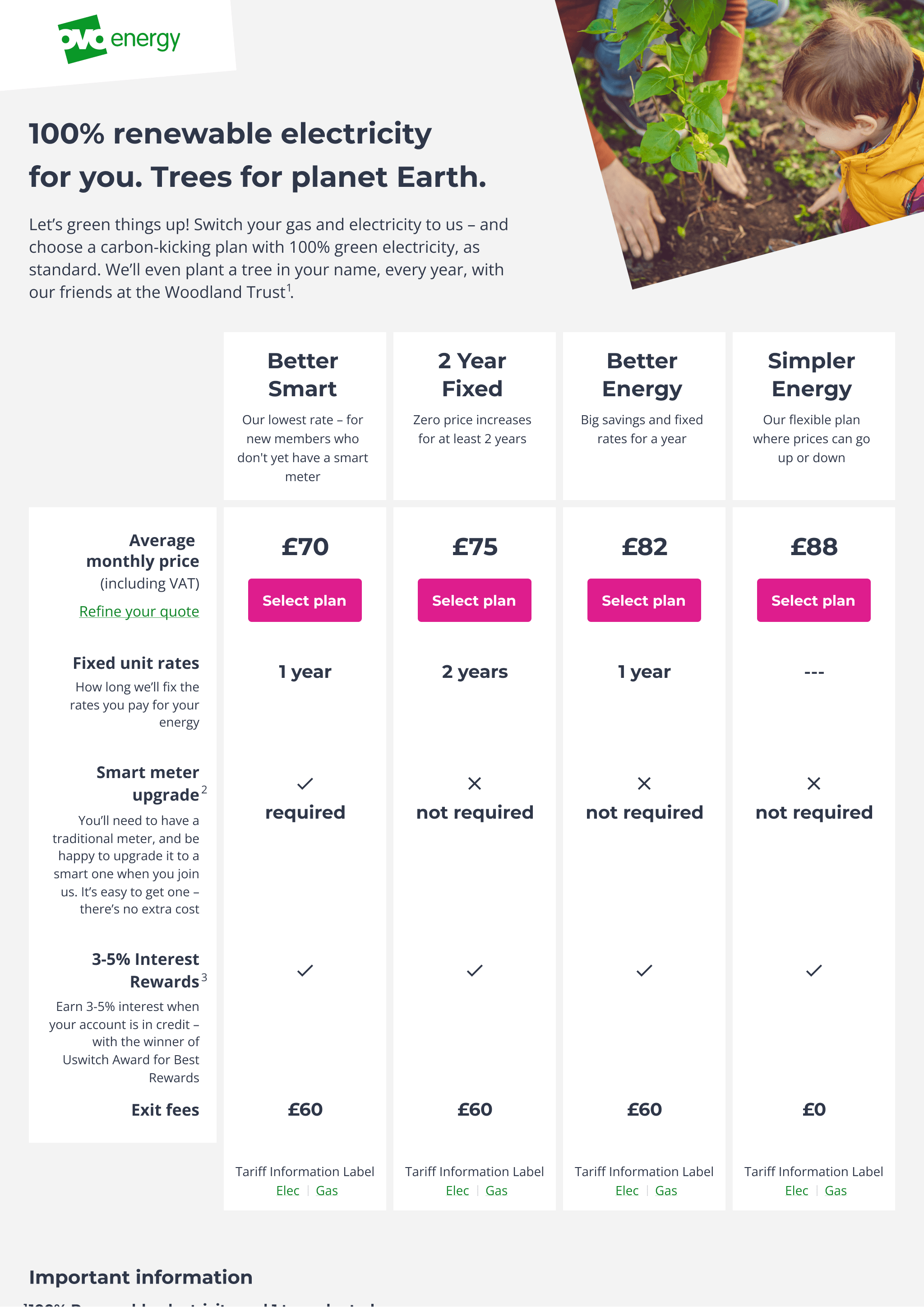
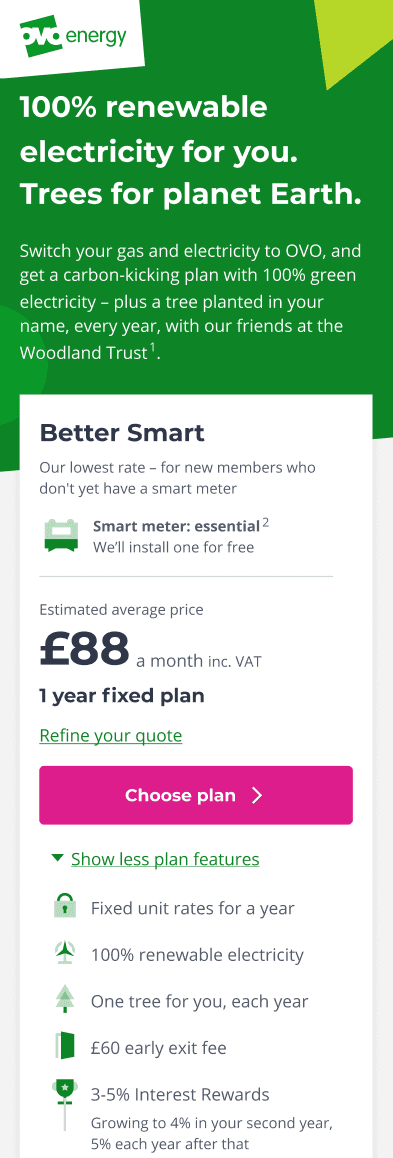
The current energy plans page
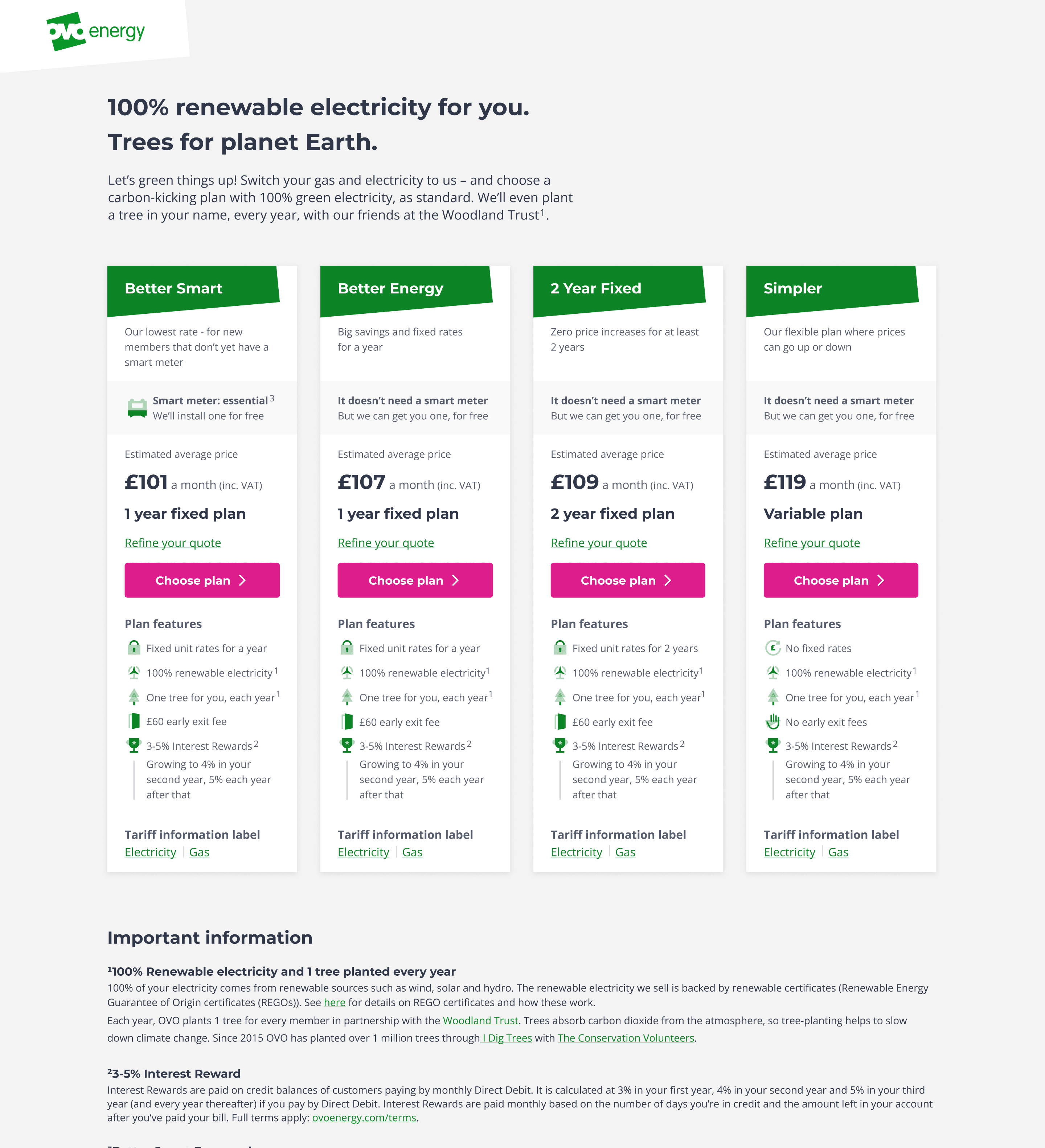
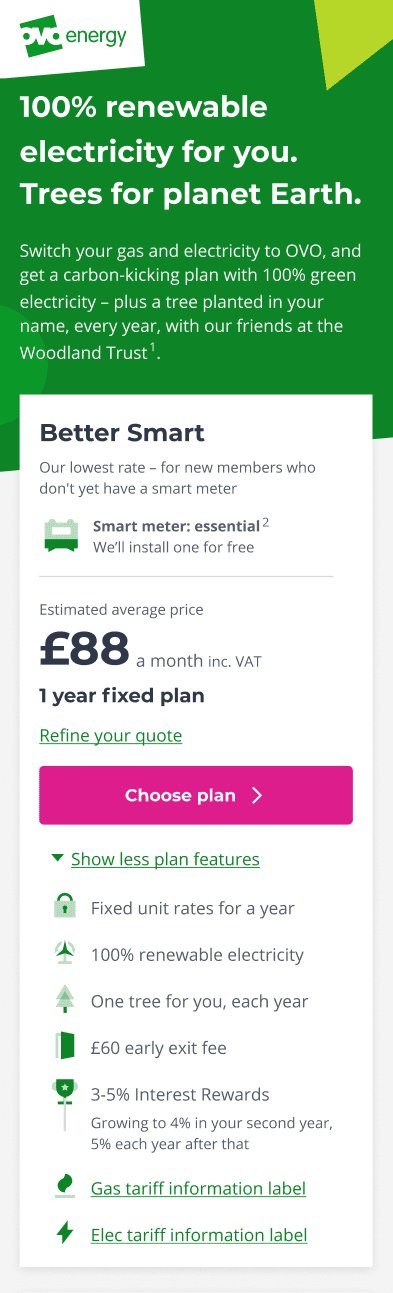
…and the updated plans page
REFLECTIONS
A new high-converting energy plans page ⚡️
Two weeks after launching the A/B test, desktop conversion increased by 9.4%.
This translated into an additional £1.4k in revenue and £300k in projected customer lifetime value.
However, mobile and tablet performance declined, leading the team to close the test and mark the hypothesis invalid. Curious about the discrepancy, I revisited the design and discovered that key plan descriptions and ‘refine quote’ links were missing on smaller screens.
After resolving these issues with engineering, mobile conversions recovered and exceeded baseline performance.
Led an end-to-end design process
I facilitated alignment across research, sketching, testing, and iteration. Bringing stakeholders into each phase strengthened buy-in and accelerated decision-making.
Scaling research impact with reusable artefacts
The task success scoring framework and journey map I introduced were adopted by other designers, helping standardise how qualitative insights were evaluated across projects.